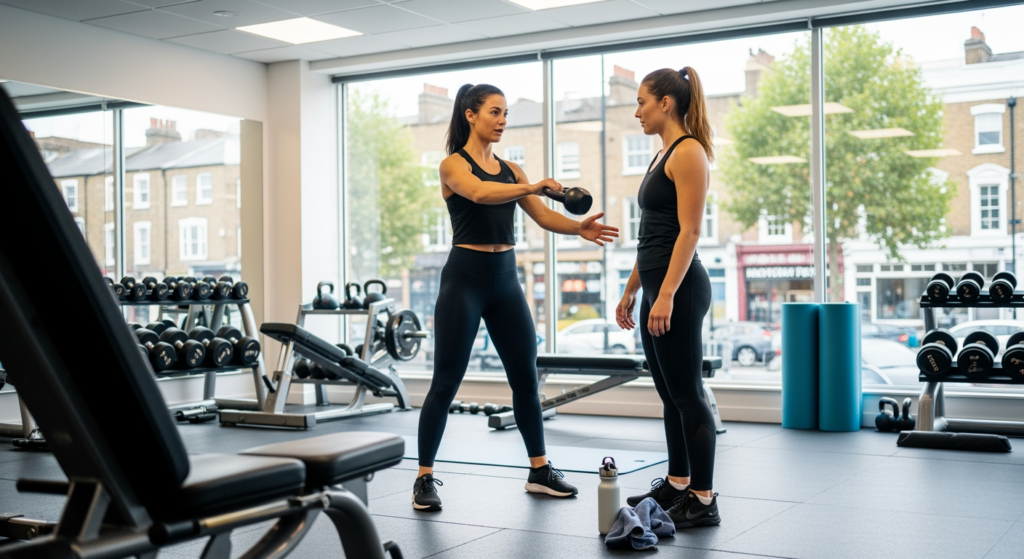
Finding boots-on-the-ground support makes fitness simple and consistent, and if you’re searching for a female personal trainer Dalston, you’re already thinking locally and smart. Local health and activity trends show many people in London are looking for tailored support to meet goals and stay motivated — the Office for National Statistics monitors physical activity patterns across the country and highlights the need for accessible services for urban communities like ours, where routines can easily get disrupted.
Why work with a female personal trainer in this part of town
I’ve worked with clients across Hackney, Stoke Newington and beyond, and one thing stands out: many women prefer coaching from another woman because it can feel more collaborative and understanding. A female trainer often brings experience with women’s health topics like pregnancy, postpartum recovery, perimenopause and menopause. In a neighborhood like Dalston — lively, diverse, and compact — a trainer who knows local spaces and schedules can tailor sessions that fit the realities of this area.
Comfort and communication
Comfort matters. When you feel at ease with your coach, you’re more likely to ask questions, share setbacks, and keep returning. I hear this from clients who appreciate instructors who listen first and push second. That trust makes progress sustainable, not just fast.
Local knowledge that matters
A trainer who knows Dalston’s parks, studio options, and travel patterns can plan smarter sessions. Whether it’s a strength block in a small studio off Kingsland Road, a conditioning run around Caldervale Park, or mobility drills you can do at home between shifts, local awareness saves time and keeps training realistic for your week.
Trends that are shaping women’s training right now
Fitness trends shift quickly, but two have real staying power for women in this city: strength-first programming for long-term health, and hybrid training that mixes in-person coaching with simple tech. Strength training is increasingly seen as essential for bone health and metabolic resilience, while hybrid approaches use short video check-ins, wearables, or messaging to keep accountability between face-to-face sessions. Both work well for people juggling work, family, and social life in a busy neighborhood.
What a typical coaching path looks like
I like to think of training as a short roadmap with checkpoints, not a never-ending sprint. A typical path with a local female trainer usually follows these stages: assessment, customized planning, steady progress with regular reviews, and transition to maintenance. Each step is tuned to your lifestyle in Dalston — familiar commutes, social routines, and local access to parks or small studios shape how the plan gets built.
Assessment and planning
Assessments are simple. We talk goals, perform basic movement checks, and consider health history. That’s where we establish priorities — weight loss, strength, mobility, sport-specific goals, or preparation for pregnancy. The plan that follows is short-term and flexible so life in the city doesn’t derail progress.
Progress and review
Reviews every four to six weeks make sure training adapts to real life. If you have a busy month at work, we scale volume down and focus on high-impact sessions. If you have energy, we step up intensity. This flexibility is what helps people stay consistent over years.
How to choose the right trainer in Dalston
Choosing a trainer is part fact-finding and part vibe check. Here are practical points to weigh when you meet someone in person or online.
- Credentials and experience working with women in the life stage you’re in.
- Programming style that matches how you like to train — strength, mobility, circuit-style, or slow and steady.
- Location and availability that fit your schedule, whether near Kingsland Road, Dalston Junction, or on quieter residential streets.
- Communication style: do they explain the why behind exercises and check how you’re feeling?
Questions to ask at your first consultation
When you meet potential trainers, you want clarity quickly. Ask these to keep the conversation useful and focused.
- How do you structure a typical session and how do you track progress?
- Have you worked with clients with similar goals or health history?
- What do you expect from me between sessions to make progress?
- How do you handle missed sessions or injury adjustments?
Sample 8-week starter plan for someone new to training
This is a high-level example designed for a woman balancing work and life in the city. It focuses on three sessions a week and simple habit changes between workouts. Always check with a medical professional before beginning a new program.
Weeks 1–2: Establish a baseline with full-body strength sessions and two short walks or mobility sessions. Focus on learning movement patterns like squats, hinge (deadlift variation), push and pull. Keep volume light to build confidence.
Weeks 3–5: Increase load and introduce one conditioning day. Sessions become slightly more structured: heavier compound lifts with controlled tempo, and a 15–20 minute circuit for conditioning. Add basic core stability work and 10 minutes of mobility after sessions.
Weeks 6–8: Prioritize strength progression and recovery. Introduce a testing day to measure improvement in lifts or a timed conditioning piece. Review nutrition basics and daily activity, then plan the next phase based on goals.
Quick, safe at-home routine you can do between sessions
When Dalston is busy and studio slots are tight, a short at-home routine can protect your gains. Do this circuit twice a week on non-lifting days. It takes about 20–25 minutes and requires only bodyweight or a set of dumbbells.
- Warm-up: 5 minutes brisk walking or march in place, arm circles, hip swings.
- 3 rounds: 10 bodyweight squats (or goblet squat), 8–10 push-ups (modify on knees if needed), 12 bent-over rows with dumbbells or filled water bottles, 30-second plank.
- Cool-down: light stretching and diaphragmatic breathing for 2–3 minutes.
How training solves common pain points
People come to a trainer for lots of reasons: they’ve hit a plateau, they’re unsure what to do in the gym, they want guidance around perimenopause symptoms, or they need a program that fits an unpredictable schedule. A good female trainer will solve these by offering clear structure, small habit changes, and building confidence through achievable wins. For example, if joint pain limits movement, a trainer will shift towards strengthening surrounding muscles and improving mobility instead of forcing painful exercises.
Tools and tech that help
Modern coaching often mixes in simple tech: short video check-ins, a shared training log via an app, or wearables that track steps and sleep. These tools add accountability without getting in the way of real life. I recommend technology that is lightweight and focused — one simple app or a few shared videos — rather than a dozen platforms that eat time.
Realistic outcomes you can expect
Results depend on starting point, consistency, and lifestyle. In four weeks you’ll likely feel stronger and have better energy. After eight to twelve weeks, most people see visible strength gains, improved movement quality, and clearer habits around activity. The goal is not a temporary sprint but a set of tools that keep you active through different seasons of life.
Safety and health considerations
Your trainer should always screen for injuries and any medical issues. If you have a history of chronic pain, recent surgery, or specific conditions like pregnancy-related concerns, make sure the trainer knows how to modify sessions safely. Trainers with continued education in women’s health or rehabilitation are valuable because they integrate safety with effective progress.
Pricing and value — what to expect locally
Pricing varies by experience, session type, and whether sessions are private or small group. In an area like Dalston you’ll find a mix of independent trainers, boutique studios, and online coaching options. Think about value, not just hourly rate: a slightly higher fee for a trainer who gives clear programming and accountability often beats cheaper sessions that leave you on your own between appointments.
Tips to stay consistent in a busy neighborhood
Staying consistent is the main challenge for busy people. Here are a few practical habits I recommend that fit urban life.
- Schedule sessions like appointments and treat them as non-negotiable.
- Plan two mini-activity windows on high-demand days (10–15 minutes each) instead of skipping entirely.
- Use local routes and parks for conditioning — short runs, stair climbs or hill repeats are time-efficient.
- Create a simple pre-session routine to switch from work mode to workout mode fast.
How to start: a three-step action plan
If you’re ready to move, here’s a simple starting plan I give clients during their first week. It’s low friction and gives momentum.
- Book a short consultation with a trainer to share goals and schedule. Bring a calendar and be honest about time constraints.
- Commit to two in-person sessions and one short at-home routine in week one. This reduces overwhelm while building habit.
- Review progress after two weeks and adjust. Small, consistent changes beat grand plans that never materialize.
What to expect from your first month
The first month is the discovery phase. Expect to learn proper movement patterns, build a base level of strength, and set simple habits around sleep, hydration, and daily activity. Trainers often focus on habit formation as much as exercise during this time because habits are what make results last.
Final thoughts and next steps
If Dalston life is keeping you on your toes, a female personal trainer who understands this neighborhood can make fitness manageable and relevant. You don’t need perfection; you need a plan that fits your week, a coach who listens, and small wins that add up. When you’re ready to take the next step, consider a short consultation to map a plan that works around your schedule and goals.
For a personal, local approach to training in Dalston, reach out to KB Personal Training to book a consultation and find out how a tailored program can fit into your week.