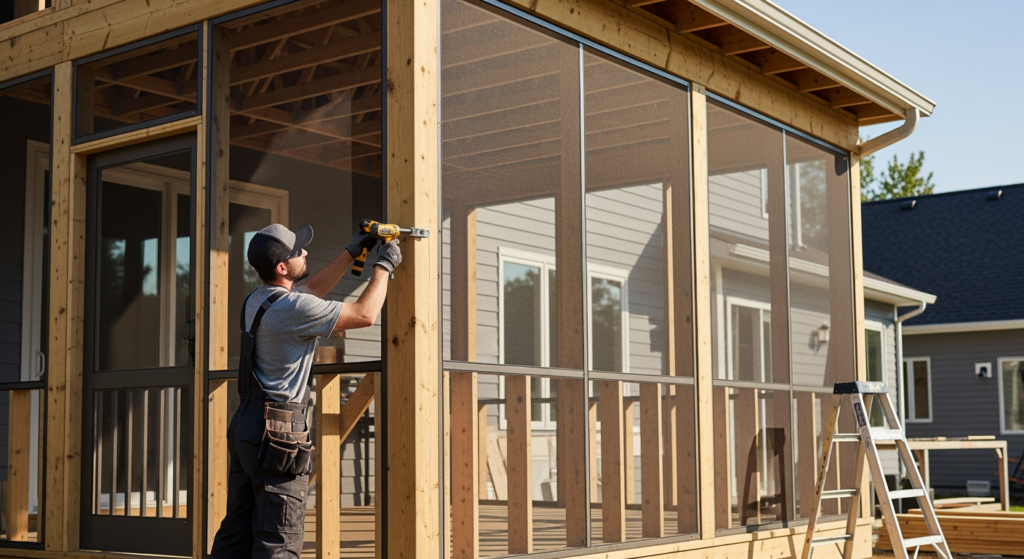
When I first started helping friends turn ordinary back porches into year-round living spaces, I learned quickly that a local screened porch builder can make the difference between a project that adds lasting value and one that becomes a maintenance headache. A properly designed screened porch not only expands your living space but also helps protect your family from mosquitoes and other pests — something the Centers for Disease Control and Prevention has guidance on for reducing mosquito-borne risk on its homepage. In this guide I’ll walk you through what to expect in Athens, GA, how to pick the right contractor, which upgrades are worth the price, and simple maintenance tips that keep your porch looking great for years.
Why a screened porch makes sense in Athens and this area
Athens’ humid summers and mild winters make outdoor living especially attractive. Neighbors in areas like Normaltown, Five Points, and the Boulevard District already know how valuable shaded, bug-free outdoor rooms are for entertaining, relaxing after work, or giving kids a safe play area. A screened porch increases usable square footage without the heavy cost and permitting of a full addition. It also helps you enjoy fresh air during long pollen seasons and reduces indoor bug problems by giving critters a barrier before they reach your entryways.
What a well-built screened porch delivers
A screened porch is more than screens and framing. When it’s well planned, it improves the home’s flow, increases resale appeal, and provides a flexible room that can adapt over time. Expect these tangible benefits from a properly executed project:
- Comfortable, shaded outdoor living that cuts direct sun and wind exposure.
- Added resale value and curb appeal without converting the structure into conditioned space.
- Lower pest intrusion into the main house, especially during warmer months.
- Options to upgrade later — screens that convert to windows, ceiling fans, or smart shades.
How to pick the right screened porch builder in Athens
Not all builders are the same. I always tell homeowners to ask straightforward questions and to look for local experience that matches the scope of work. A good screened porch contractor will understand Athens’ weather patterns, local permitting, and common foundation conditions in older neighborhoods.
Here are the key things to check when you’re vetting builders:
- Portfolio of completed screened porch projects with photos and references from local clients.
- Clear, written estimates that list materials, labor, permits, and timeline — not just a lump sum.
- Proof of insurance and any local licensing or trade association memberships.
- Open communication about how they address moisture control, pest barriers, and ventilation.
Common questions to ask during estimates
During the estimate visit, bring a list of priorities and ask how the contractor would solve specific issues on your property. For example, does the builder plan to attach the porch to existing framing or build a freestanding structure to protect siding? How will they handle roof tie-ins and flashing where the new roof meets the house? These seemingly small details determine how durable the finished porch will be.
Materials, styles, and upgrades to consider
Material choice affects longevity, maintenance, and cost. Here’s what I recommend thinking about when selecting materials and features for a screened porch in this region:
Screens and framing
Fiberglass is the most common screen material and is affordable and easy to replace. For homeowners who want extra durability and insect protection, consider aluminum or high-density polyester screens. If pollen and fine particles are a concern, look for screening labeled “No-See-Um” or micro-mesh, which blocks smaller insects and provides slightly better wind resistance. For framing, pressure-treated wood is widely used, but composite posts and rails reduce long-term maintenance in humid climates.
Flooring, roofing, and hardware
Flooring options include painted or stained pressure-treated decking, composite decking that resists rot, and tiled or sealed concrete if you want a finished look that’s easy to clean. Roofing usually ties into your existing roofline and should include proper flashing to avoid leaks. Stainless-steel fasteners and corrosion-resistant hardware will last longer in Georgia’s humid environment. Also consider screened doors with tight seals and quality latches to reduce drafts and insect entry points.
Permits, costs, and timelines in Athens
Permits depend on project size and whether you’re altering the roofline or footprint. In many cases, screened porches that change structural components will require a local building permit and an inspection schedule. Expect the permitting process to add time to the project, but it’s worth it — inspections protect you and ensure the work meets safety standards.
Costs vary widely based on size, materials, and upgrades. As a basic guide, modest screened porches often start in the low thousands, while custom multi-season rooms with glass panels, upgraded floors, and electrical work can move into the mid to high five-figure range. A reliable contractor will give a line-item estimate and an expected timeline. Weather delays are common in our region, so plan for a realistic seasonal window rather than a single promised completion date.
Trending topics in porch design and construction
Two trends I’m watching closely are the rise of convertible screen systems and a growing focus on sustainability. Convertible systems allow you to swap screens for glass panels or accordion windows, turning a screened porch into a climate-controlled sunroom during cooler months. This is especially popular with homeowners who want more year-round use without a full addition.
Sustainability-wise, more homeowners are choosing low-VOC finishes, locally milled lumber, and energy-efficient LED lighting. Smart fans, motion-sensing lighting, and solar-powered exterior fixtures are also becoming mainstream upgrades that reduce energy use and increase convenience.
Realistic maintenance expectations and simple care
Maintaining a screened porch is straightforward if you plan a little upkeep each season. Regular care prevents minor issues from becoming costly repairs. A few preventative steps will help your porch last decades and keep it looking fresh.
- Clear the roof gutters and remove leaves and debris from the porch roofline to prevent trapped moisture and wood decay.
- Wash screens gently with a soft brush and mild soap every year; replace damaged screens promptly to keep pests out.
- Inspect fasteners and flashing annually, especially after storms, and touch up paint or stain to protect exposed wood.
- Lubricate door hinges and check seals to maintain a tight fit and smooth operation.
Common problems I see and how professionals solve them
Homeowners often call me when they face recurring insect problems, water intrusion, sagging floors, or doors that don’t seal. A skilled screened porch contractor will diagnose root causes rather than just patch visible issues. For example, water damage near the house is often due to improper flashing or gutter overflow, not faulty screens. Addressing grading, drainage, and flashing solves the problem permanently. Similarly, ventilation problems that lead to mildew are often fixed by adding passive vents or ceiling fans to increase airflow rather than replacing materials unnecessarily.
Budget-friendly upgrades that add the most value
If you’re working within a budget but want the most impact, focus on these upgrades first. They tend to improve daily use and show well to future buyers:
– Ceiling fans with lighting: improve comfort and reduce insect attractants from open bulbs.
– Durable flooring such as composite decking: reduces long-term maintenance and keeps the porch usable in wet conditions.
– High-quality screens or micro-mesh in high-traffic areas: offer better protection and longevity.
– Built-in electrical outlets and task lighting: support cooking, charging, and entertainment without unsightly extension cords.
How to plan your project timeline
Start planning at least three months before you want the porch completed. This gives time for design decisions, permits, and scheduling a reputable contractor during a less busy season. If you’re targeting spring or early summer use, begin the process in late fall or early winter. Contractors often book projects months in advance, especially in the region’s busy spring season, so moving quickly once you decide will get you a better slot and fewer delays.
Final tips before you sign a contract
Before agreeing, make sure the contract spells out payment milestones, warranty details, clean-up responsibilities, and how change orders will be handled. A local contractor who works regularly in Athens will be familiar with neighborhood constraints and common foundation or drainage conditions near older homes. Trust is as important as price — the lowest bid is often not the lowest cost over time if repairs follow due to poor materials or shortcuts.
If you want to start with a small step, consider a design consultation or a phased plan: begin with framing and screens, then add flooring or glass panels later. This approach spreads costs and gives you a chance to evaluate how you use the new space before investing in higher-end finishes.
I hope this guide helps you feel confident about adding a screened porch to your home in Athens, GA. For a locally focused team that understands neighborhood styles and the climate here, visit Tipton’s Fine Tuned Carpentry to discuss ideas, timing, and a custom plan that fits your needs and budget.