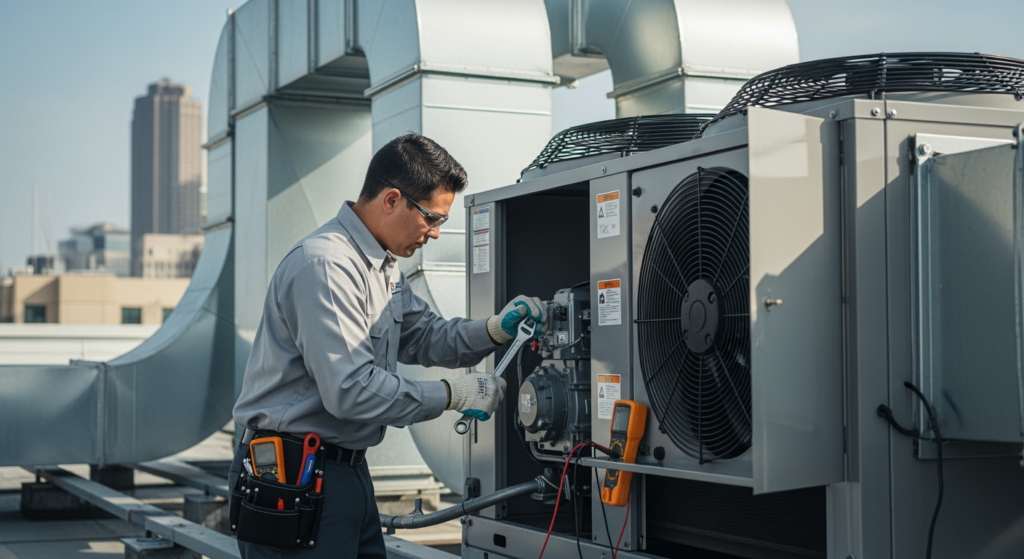
Keeping a commercial building comfortable, healthy, and energy-efficient takes more than a one-time fix. I’ve seen how smart planning and timely commercial HVAC services can transform operating costs and tenant satisfaction, and I’ll walk you through the practical steps that work. For data and guidance on energy-saving opportunities in commercial buildings, the U.S. Department of Energy is a great starting point energy.gov.
Why commercial HVAC matters for businesses
Heating, ventilation, and air conditioning systems account for a large portion of a commercial building’s energy use. Beyond energy consumption, HVAC affects indoor air quality, employee productivity, and regulatory compliance. When systems run inefficiently, problems multiply: higher utility bills, uneven comfort across floors, and equipment failures at the worst possible times. My goal here is to give you clear, actionable guidance so you can make smart choices about upgrades, maintenance, and operational strategy.
Common problems I see in commercial HVAC systems
Commercial systems are more complex than residential ones: larger equipment, multiple zones, rooftop units, chillers, boilers, and integrated controls. That complexity brings specific pain points. Recognizing the early signs of each problem usually prevents costly downtime.
Frequent failure points
Some issues come up repeatedly in my work: clogged coils and filters that reduce airflow, failing compressors in rooftop units, leaking chilled water lines, scale and corrosion inside boilers, and controls that drift out of calibration. Older control systems also struggle to communicate with new smart devices, which can leave valuable efficiency gains on the table.
Signs your system needs professional service
Watch for these warning signs and act quickly when they appear:
- Unusual noises, banging, or vibration from equipment that used to run quietly
- Wide temperature swings between zones or floors, even when thermostats are set correctly
- Rising energy bills without a change in occupancy or business hours
- Frequent short cycling or systems that fail to reach setpoints
Overview of top commercial HVAC services
When I talk about commercial HVAC services, I mean a full range of work from inspections and preventive maintenance to equipment replacement and control system upgrades. Here’s how each service helps your building perform better and cost less to operate.
Preventive maintenance
A structured preventive maintenance program is the foundation of reliable HVAC. Regular inspections and seasonal tune-ups keep equipment operating at design performance and extend equipment life. Typical preventive work includes testing safety controls, cleaning coils and drain pans, lubricating moving parts, tightening electrical connections, verifying refrigerant charge, and calibrating thermostats and sensors.
Repairs and emergency response
When something breaks, fast, accurate diagnosis matters. Experienced technicians identify root causes and repair systems so downtime is short. Emergency response plans for commercial properties often include after-hours triage, temporary cooling or heating solutions, and coordination with building management to prioritize critical spaces like server rooms and retail areas.
Replacement and retrofits
Sometimes repair isn’t the most economical route. Upgrading to modern rooftop units, high-efficiency chillers, or variable refrigerant flow systems can pay back through lower energy bills and reduced maintenance costs. Retrofits that add variable speed drives to pumps and fans or upgrade controls can often deliver big efficiency gains without full equipment replacement.
Controls and building automation
Smart controls are a major lever for cutting energy use. Building automation systems allow scheduling, setpoint optimization, demand-controlled ventilation, and remote monitoring. When properly commissioned, these systems reduce runtime, prevent simultaneous heating and cooling, and make faults visible before they become emergencies.
Trending topics shaping commercial HVAC
The industry is changing fast. I keep an eye on trends that affect operating costs and compliance so building owners can plan ahead rather than react. Two big trends to watch are electrification and smarter indoor air quality strategies.
Electrification and heat pumps
Electrification continues to gain momentum in commercial buildings. Heat pump technology, including large-scale air- and ground-source systems, is becoming a viable alternative to gas-fired equipment in many climates. Heat pumps deliver efficient heating and cooling in one package and pair well with renewable electricity sources. Planning for electrification today reduces future retrofit costs and can align your building with decarbonization goals.
Indoor air quality and occupant health
Indoor air quality (IAQ) remains a top priority. Improved filtration, increased outdoor air ventilation, and real-time IAQ monitoring are regular requests from building owners, particularly in downtown office towers and medical facilities. Demand-controlled ventilation that ties outside air intake to CO2 or pollutant sensors optimizes both air quality and energy use.
How I diagnose and solve commercial HVAC problems
My approach is a mix of careful inspection, data collection, and prioritization. Here are the steps I use to assess a system and recommend the best path forward. These steps help teams make budget-friendly choices while targeting quick wins.
- Baseline audit: measure energy use, inspect equipment, and map zones to identify the worst-performing areas.
- Targeted testing: check refrigerant pressures, verify airflow with anemometers, test pumps and valves, and run control sequence diagnostics.
- Prioritize actions: list fixes from highest ROI to lowest, considering tenant comfort and critical systems.
- Implement and monitor: complete work in phases when possible and monitor performance after each change to ensure value.
Seasonal checklist for building owners and facility managers
A reliable seasonal checklist reduces emergency repairs and keeps systems efficient. I recommend integrating this checklist into a preventive maintenance contract so it happens on schedule regardless of staff turnover.
- Pre-season inspection: clean coils, replace filters, and test thermostats and safety controls before summer and winter peaks.
- Check drains and condensate pans monthly to prevent backups and microbial growth that impact IAQ.
- Exercise valves and dampers quarterly to prevent sticking and ensure proper zone control.
- Review historical energy data after each season and adjust setpoints or schedules to match occupancy patterns.
How costs and ROI typically break down
Budgeting for commercial HVAC is about balancing upfront cost and lifecycle savings. Preventive maintenance contracts are often a small fraction of replacement costs but delay capital expenditures and reduce emergency repair fees. When evaluating upgrades, I look for measures with payback periods under five years as the highest priority, such as adding variable speed drives, upgrading to high-efficiency rooftop units, or optimizing control sequences.
Incentives, rebates, and tax credits can improve ROI dramatically. Many utilities and state programs offer rebates for efficient equipment and controls upgrades. Check local incentive programs and factor those savings into your project economics when planning equipment replacement.
Choosing the right commercial HVAC partner
Not every contractor offers the same depth of expertise. When choosing a partner, I advise looking for three things: technical competence, strong references from similar buildings, and clear communication about pricing and scheduling. A good partner will perform a documented audit, present options with cost and ROI estimates, and offer a transparent maintenance plan that aligns with your operational priorities.
Questions to ask potential contractors
Ask candidates to explain their approach to system diagnostics, how they handle emergencies, and what warranties or performance guarantees they offer. Request references from commercial clients with buildings similar to yours, such as multi-tenant offices, schools, retail centers, or healthcare facilities. Finally, verify that technicians carry manufacturer certifications and ongoing training in the latest HVAC technologies.
Actionable tips to reduce HVAC costs starting this month
You don’t need a major capital project to begin saving. These simple, immediate steps often produce measurable benefits in a short time.
- Adjust setback schedules on nights and weekends to match actual occupancy and prevent unnecessary runtime.
- Replace or clean filters on a regular schedule to maintain airflow and reduce fan energy use.
- Use zoning and temperature setbacks for unoccupied floors or suites to avoid conditioning unused space.
- Review lighting and equipment schedules; reducing internal heat loads can lower cooling demand.
Case study examples of impactful upgrades
I’ve seen small investments produce big wins. In one mid-rise office building, replacing aging rooftop units and adding variable speed drives cut energy spend by more than 20% while improving temperature consistency. In a retail center, adding CO2-based demand ventilation and higher-efficiency filters improved air quality and reduced energy use by optimizing outdoor air intake. These projects paid back within three to five years when incentives and avoided maintenance costs were included.
Preparing for future regulations and expectations
Regulatory pressure and corporate sustainability goals are pushing many building owners to reduce carbon footprints and report energy use more rigorously. Planning for future requirements means collecting good baseline data now, prioritizing electrification-ready infrastructure, and choosing equipment and controls that can integrate with energy management platforms. Early planning reduces the cost of future upgrades and ensures your building remains attractive to tenants who care about sustainability and health.
Final thoughts and next steps
If you manage a commercial property, start with a clear audit and a prioritized plan. Preventive maintenance and small control upgrades often deliver the fastest returns. For larger projects, build a phased plan that allows you to measure savings after each stage and use those savings to fund further improvements. When in doubt, prioritize tenant comfort and critical systems like server rooms and healthcare spaces; these areas have the highest cost for downtime.
Ready to take the next step? For reliable, professional help with commercial HVAC services that balance efficiency, comfort, and long-term value, contact Nextech NA. I trust their team to provide thorough audits, practical recommendations, and skilled execution across a range of commercial systems.