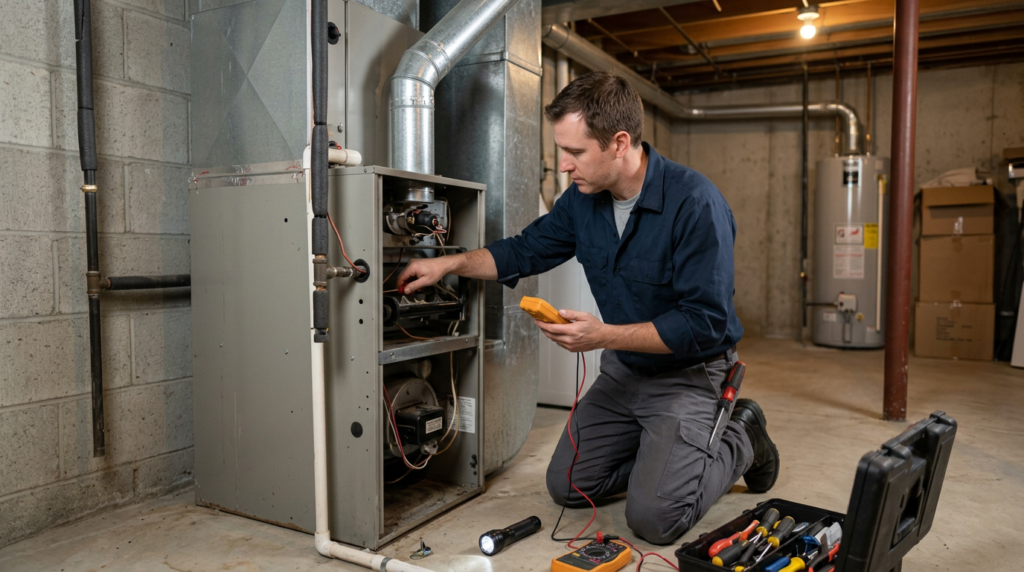
Quick answer: If your furnace is blowing cold air, short-cycling, making new noises, or tripping safety shutoffs, repair is usually the first move—especially if the issue is a failed igniter, dirty flame sensor, clogged filter, or thermostat problem. Replacement makes more sense when repairs are frequent, parts are no longer available, or the heat exchanger is compromised. A technician can confirm with combustion and safety checks.
Quick Clues That Point to Repair
Most “sudden” furnace failures come down to a few common, fixable problems. A clogged filter can overheat the system and trigger a limit switch, causing the furnace to shut off and restart repeatedly (short-cycling). A dirty flame sensor can light the burners for a few seconds and then shut them down, leaving you with lukewarm air. Thermostat issues—dead batteries, loose wiring, or a bad temperature sensor—can also mimic a furnace problem.
If you’re seeing these symptoms, scheduling furnace repair Eatonton GA is usually smarter than shopping for a new system right away. A service call can confirm basics like gas supply, proper ignition, clean burners, and safe venting, and it can catch small issues before they stress the blower motor or control board.
Stop and call for service immediately if you smell gas, see soot around the furnace, notice a strong “burning plastic” odor that doesn’t clear quickly, or your carbon monoxide alarm goes off. Those aren’t DIY situations.
Rules of Thumb for Repair vs. Replacement
These are general guidelines, not guarantees, but they’re practical for deciding what to do next:
Rule of thumb #1 (age bands): If a furnace is under about 10 years old, repair is often the first choice unless there’s a major safety issue. In the 10–15 year range, compare repair cost and reliability history. Past roughly 15–20 years, replacement becomes more common because wear, corrosion, and parts availability start stacking up.
Rule of thumb #2 (repair cost vs. replacement): If a single repair is approaching roughly 30%–50% of what you’d expect to spend on a comparable replacement, many homeowners start leaning toward replacement—especially if comfort has been inconsistent.
Rule of thumb #3 (what “frequent breakdowns” means): Two or more service calls in one heating season, or the same symptom returning after a recent fix, is a reasonable threshold to discuss replacement options.
Rule of thumb #4 (safety and “no-go” failures): A suspected cracked heat exchanger, repeated rollout/CO-related shutdowns, or visible soot/backdrafting concerns usually shifts the decision toward replacement or at least a hard stop until safety is verified.
What a Good Furnace Diagnostic Should Include
A solid diagnostic goes beyond “it turns on now.” Expect checks of ignition sequence (hot surface igniter or spark), flame sensor condition, burner flame quality, and the safety circuit (limit switch, pressure switch, rollout switch). On gas furnaces, venting and combustion air matter; a partially blocked flue or intake can cause nuisance shutdowns and unsafe operation.
Airflow testing is also useful. Static pressure readings can hint at dirty coils, restrictive filters, undersized returns, or closed dampers. Electrical checks—tight connections, proper voltage, and capacitor health (if applicable)—help prevent repeat failures. If the system is short-cycling, the tech should confirm thermostat placement/settings and verify the furnace isn’t overheating due to airflow problems.
Ask for a clear explanation of the failed part, what caused it (when knowable), and what maintenance would reduce the chance of a repeat. A straightforward written estimate and a plan for next steps should follow.
Eatonton-Area Safety and Comfort Considerations
In the Eatonton area, winters are usually mild but cold snaps do happen, so furnaces often sit idle for stretches and then get pushed hard when temperatures drop. That pattern can expose ignition issues (dirty flame sensors, weak igniters) and airflow problems (filters loaded with dust after months of low use). Running the system briefly before the first real cold spell and replacing the filter ahead of time can prevent a no-heat surprise.
Carbon monoxide safety matters anywhere fuel-burning equipment is used. Keep a working CO alarm outside sleeping areas and test it regularly, and treat any alarm as an emergency. If you notice persistent condensation on windows, headaches that improve when you leave home, or soot-like staining near vents, get the heating system checked promptly.
If you want help sorting repair versus replacement based on your specific furnace and symptoms, schedule a diagnostic with a licensed HVAC technician; Billy Butler HVAC can also assist with heating troubleshooting and next-step options.