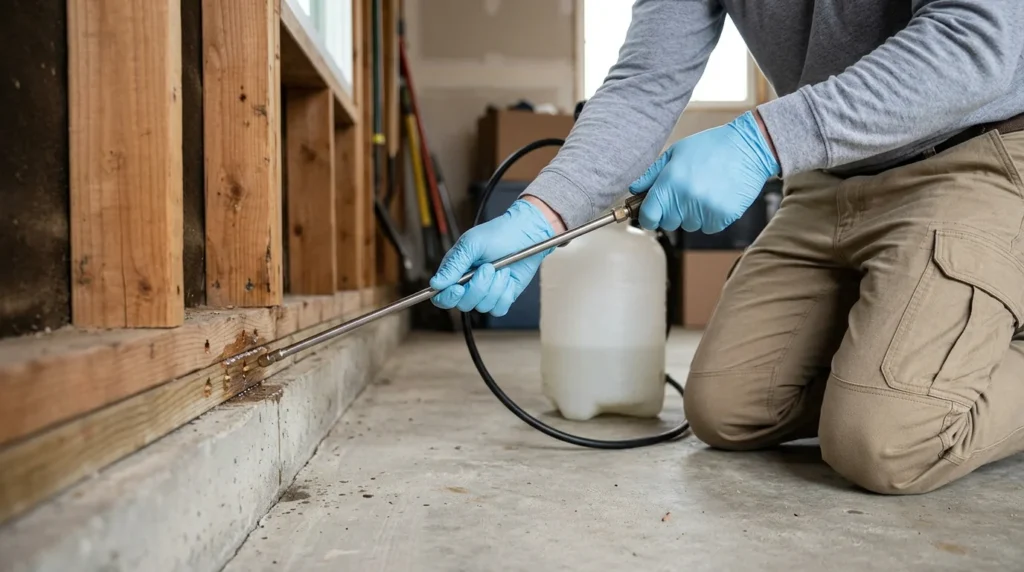
Quick answer: Yes—many homes need termite treatment even when you haven’t seen termites, because the most common species stay hidden in wood, soil, or wall voids. The decision is based on inspection findings like mud tubes, damaged wood, moisture conditions, and evidence of active feeding. A professional inspection can confirm activity, identify the termite type, and recommend a targeted plan such as a liquid soil barrier, baiting, or localized wood treatment.
Why You Often Don’t See Termites
Subterranean termites usually avoid open air and light, so they travel through soil and inside walls, flooring, and framing. You can have active feeding for a while before anything looks “wrong” from the living space. That’s why an inspection—not sightings—is what drives the decision to start termite treatment.
Common clues show up in overlooked spots: the crawlspace, garage expansion joints, around porch steps, or where a deck ledger meets the house. Mud tubes on foundation walls are a classic sign, but they can be small and hidden behind stored items. Swarmers (winged termites) are another clue, often mistaken for flying ants; if you find piles of shed wings on windowsills, that’s a strong reason to get checked.
Wood damage can be subtle. Termites eat the softer springwood and leave a thin surface layer, so wood may look fine until it sounds hollow when tapped or breaks easily. In finished areas, bubbling paint, tiny pinholes in drywall, or unexplained sticking doors can also point to moisture and wood movement that termites take advantage of.
What a Good Termite Inspection Looks For
A thorough inspection focuses on conditions that let termites thrive, not just obvious damage. Inspectors look for soil-to-wood contact (like siding or porch posts touching dirt), moisture sources (leaks, poor drainage, clogged gutters), and entry points (cracks in slab edges, utility penetrations, and expansion joints). In Athens-area homes with crawlspaces, damp soil and limited ventilation can create a welcoming environment.
They also try to identify the termite type. Subterranean termites typically require soil-focused control (liquid barriers or baits), while drywood termites—less common in many parts of Georgia—may call for localized wood treatments. Correct ID matters because the best method is tied to how the termites live and travel.
Ask what evidence was found and where. “No visible activity” is different from “no conducive conditions.” A clear report should separate active signs (live termites, fresh mud tubes) from risk factors (wood debris under the house, moisture, contact points) so you can prioritize fixes that reduce reinfestation pressure.
Treatment Options and How to Choose
Most professional plans fall into a few categories. Liquid termiticides are applied to soil to create a treated zone that termites can’t cross without exposure. This approach is often chosen for active subterranean termite problems or when a continuous barrier can be established around key parts of the structure.
Baiting systems use stations placed in the ground. Termites feed on the bait and share it back to the colony, which can reduce the population over time. Baits can be a good fit where trenching is difficult (hardscapes, sensitive landscaping) or when you want a monitoring-first approach, but they require ongoing checks and maintenance.
Localized treatments (like foam or spot applications) may be used for limited activity in accessible areas, but they’re not always enough by themselves if the source colony is in the soil. The best choice balances access, construction type (slab vs. crawlspace), evidence of activity, and how much monitoring you’re willing to keep up with.
What You Can Do Right Now to Lower Risk
Reduce moisture and remove “bridges” to the house. Fix leaks, keep gutters flowing, extend downspouts away from the foundation, and avoid piling mulch high against siding. In crawlspaces, address standing water and consider a vapor barrier if moisture is persistent. Store firewood and lumber off the ground and away from the home.
Also clear inspection access. Termite inspectors need to see foundation walls, piers, sill plates, and expansion joints. Move stored items away from crawlspace entry areas and garage walls so tubes and damage aren’t hidden.
If you’ve seen swarmers, found wings, noticed mud tubes, or have any structural wood that seems soft or hollow, schedule a professional evaluation soon. Athens Exterminating is a local place to get help sorting out what you’re seeing and what treatment makes sense.