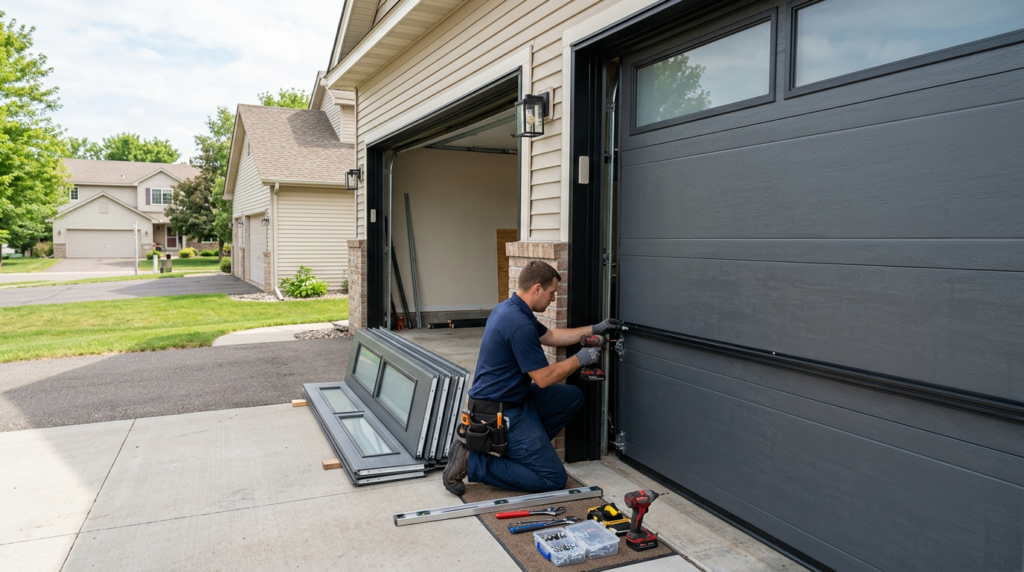
Quick answer: Choose a reliable garage door company by checking that they service your exact door type, offer clear written estimates, and can explain the repair in plain language. Ask about warranty terms for parts and labor, response times for stuck doors, and how they handle safety items like springs and cables. Look for consistent local reviews and avoid high-pressure upsells or vague pricing.
What to Look for Before You Book
A solid first step is confirming the company routinely works on your door’s brand and opener model and can get common parts without long delays. A dependable tech should be willing to describe what failed (spring, cable, rollers, sensors, opener gear) and what they’ll do to fix it, plus what could happen if you wait. If you’re comparing options, a garage door company Blaine MN should be able to tell you what’s included in a standard service call and what would cost extra before they start.
Ask for a written estimate that separates labor from parts and specifies the exact parts being replaced. “New spring” is vague; “one torsion spring sized for door weight” is clearer. Also ask how warranties work in practice: what’s covered, for how long, and whether labor is included if a part fails. Clear answers here usually correlate with smoother service later.
Pay attention to communication. If the scheduler can’t give a reasonable arrival window, or if the tech won’t explain the repair options, that’s a red flag. You want someone who treats safety seriously and doesn’t pressure you into replacing the whole door when a targeted repair is appropriate.
Blaine-Specific Ways to Vet “Local” Service
“Local” should mean they regularly serve Blaine and can prove it with basics you can verify. Check that the business lists a real physical address (not just a P.O. box) and that the service area includes Blaine in writing on their site or paperwork. If you call, ask where the technician is dispatched from and whether there are any travel or trip fees for Blaine addresses. A straightforward answer is a good sign.
For reviews, look for recent, detailed comments that describe the same kinds of work you need (spring replacement, opener repair, new door install). “Great service!” is less useful than a review that mentions the symptom, the fix, and whether the estimate matched the invoice. Consistency matters: check that the business name, phone number, and patterns of feedback look similar across major platforms, and watch for clusters of overly generic reviews posted in a short time.
Regional questions help too. In winter, doors can bind from track ice, stiff rollers, and metal contraction, and bottom seals can harden and leak air. Ask what they recommend for preventing freeze-to-floor issues, whether they inspect weatherstripping and bottom seal fit, and how they handle doors that get noisy or hesitant during cold snaps. You’re looking for practical guidance (cleaning, lubrication type, seal replacement options) rather than a one-size-fits-all pitch.
Common Problems and the Right Fix (Not Just the Fast Fix)
A door that won’t open often points to a broken spring, a slipped cable, a locked opener trolley, or misaligned photo-eyes. Springs and cables are high-tension components; replacing them is not a DIY-friendly task, and a reputable company will treat it as a safety repair, not an add-on. If a spring breaks, the door may feel impossibly heavy, lift a few inches and stop, or slam shut.
Noisy operation can come from worn rollers, dry hinges, loose hardware, or a track that’s slightly out of alignment. Lubrication helps in some cases, but grinding, popping, or a door that shakes side-to-side usually needs adjustment or parts replacement. A good tech should check door balance (with the opener disconnected) and confirm the opener isn’t compensating for a heavy door—opener strain shortens opener life.
If the opener runs but the door doesn’t move, the issue may be a stripped internal gear, a broken chain/belt connection, or a disengaged emergency release. If the door reverses unexpectedly, look for sensor issues, binding in the tracks, or incorrect force settings. The right fix addresses the root cause, not just the symptom.
Questions That Reveal Quality Fast
Use a simple 0–2 scoring rubric per item so you can compare companies objectively: 0 = vague/no answer, 1 = partial answer, 2 = specific and documented. Ask: What failed and how did you confirm it? What parts are you replacing, and are they matched to my door’s weight and height? Will you provide a written estimate with parts and labor separated? What warranty applies to parts and to labor?
Add safety and verification questions. Many reputable companies perform standard post-repair checks like door balance, photo-eye alignment, and opener safety reversal testing; you can ask them to confirm those checks are included and documented. If you want a credibility check for opener safety features, ask whether the opener setup and reversal behavior aligns with UL 325 expectations (without expecting them to quote chapter-and-verse). Score: Do they explain the tests in plain language, show you the results, and adjust settings only after fixing binding or balance issues?
Finally, score the “replacement vs. repair” conversation. Do they explain when a panel swap makes sense, when a full door replacement is more practical, and what changes with insulation, sealing, and opener compatibility? A company that earns mostly 2s across these questions is usually easier to work with and less likely to surprise you later.