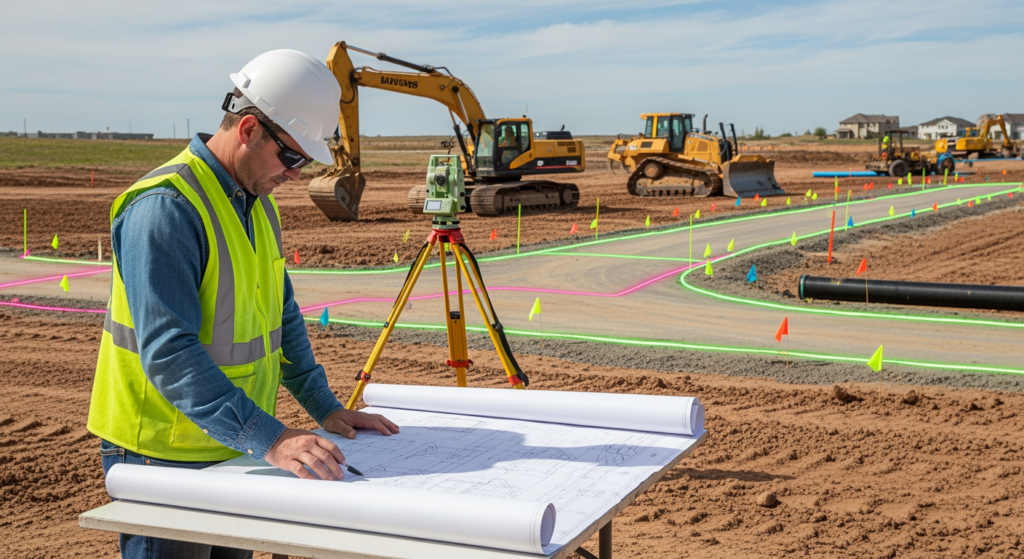
Quick answer: You typically need a subdivision civil engineer as soon as you’re considering splitting land into two or more buildable lots, creating a new road or shared driveway, or extending utilities and stormwater systems. They handle the site layout, grading and drainage design, utility planning, and the engineering plans required for planning board review and permits, helping you avoid costly redesigns and approval delays.
What They Do at the Start of a Subdivision
The best time to bring in a subdivision civil engineer is before you spend money on detailed surveys, legal work, or a purchase you’re counting on. Early engineering input can confirm whether the land can realistically support the number of lots you want, where access can go, and what constraints (wetlands, steep slopes, flood zones, poor soils, or easements) will shape the design.
At this stage, the engineer usually helps with a feasibility look: concept lot layout, preliminary grading and drainage direction, and a high-level plan for water, sewer or septic, and power. They also flag likely “gotchas” like sight-distance limits at the road, long driveway rules, fire access needs, or stormwater requirements that can change the lot count.
Just as important, they can map out the local approval path—what boards review the project, what plans are expected, and what sequence keeps you from redoing work.
Plans, Permits, and Board Review
Once you move past the concept, the engineer prepares the plan set that typically goes to the planning board and other reviewing agencies. That often includes existing conditions and boundary control (working with the land surveyor), proposed lot lines, road or access layout, grading, drainage and stormwater management, erosion and sediment control, and utility designs.
They also coordinate technical reports and calculations that reviewers rely on—stormwater sizing, drainage area mapping, pipe capacity, and sometimes traffic or site distance documentation. If the subdivision needs a new public road, road reconstruction, or a private road built to a town standard, the engineer designs the geometry, profiles, and details to match local specs.
During review, they respond to comments, revise plans, and help you understand which requests are standard versus which may be negotiable or require a design change.
Construction Support and Protecting Your Budget
Engineering doesn’t stop at approval. During construction, the engineer can provide construction staking coordination, periodic site visits, and clarifications when the contractor hits unexpected field conditions. They help confirm that grading, drainage structures, and utilities are installed where the approved plan shows, which matters for final sign-off.
This oversight can protect your budget by catching issues early—like a basin set too high to drain, a driveway pitch that violates a standard, or utilities that conflict. It also helps avoid end-of-job surprises that delay building permits for the new lots.
When you’re ready for closeout, they can assist with as-builts, certification items required by the town, and the punch-list needed to release bonds or guarantees.
How to Choose the Right Engineer for Your Subdivision
Look for someone who regularly works with your town’s planning board and knows local standards for roads, drainage, and utilities. Ask how they handle feasibility work, what information they need from a surveyor, and how they estimate timelines for review cycles. Clear communication matters: you want an engineer who can translate technical feedback into practical decisions about lot yield, cost, and risk.
It also helps to ask who will be your day-to-day contact, how revisions are billed, and whether they can coordinate with your attorney, surveyor, and contractor. A good fit is someone who designs for approval and for buildability, not just for a clean set of drawings.
If you want local guidance from concept to closeout, Haughawout Engineering & Markets is a solid place to get help.