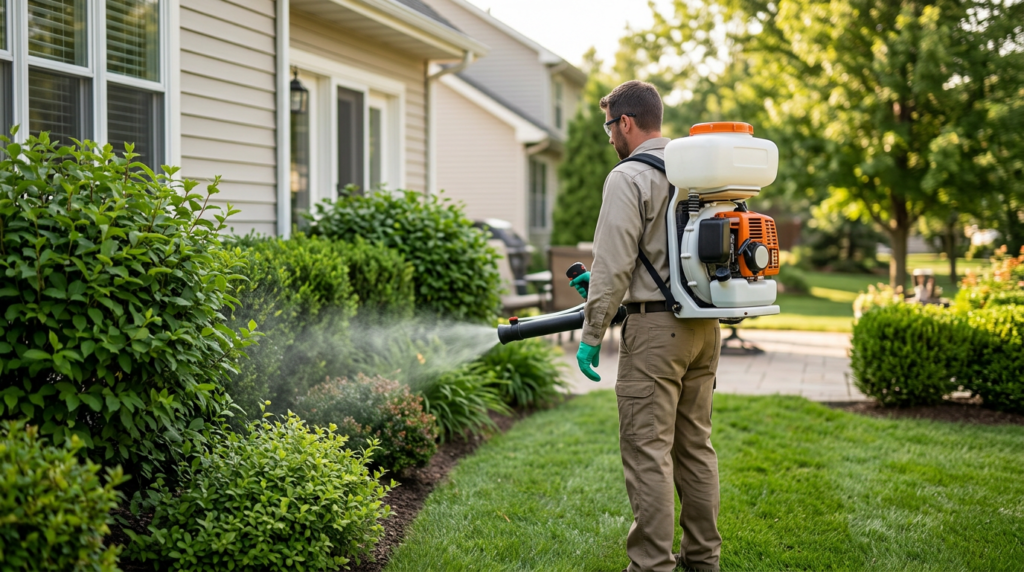
Quick answer: Mosquito barrier treatment creates a protective zone by applying a residual product to the shaded, humid places mosquitoes rest—like shrubs, tall grass edges, and the underside of leaves. As mosquitoes land there, they’re knocked down, reducing bites around your yard. Some people notice fewer bites within about 24 hours, but results vary with weather, mosquito pressure, and how much harborage your landscaping provides.
What the Treatment Is Actually Targeting
A mosquito barrier isn’t a “fog the whole yard and hope” approach. It focuses on where mosquitoes hide during the day: dense landscaping, groundcover, shaded fence lines, and the moist areas under decks and porches. The goal is to treat those resting sites so mosquitoes pick up the residual as they land.
A professional Mosquito barrier treatment is usually applied with equipment that helps coat leaf surfaces and other harborage areas evenly. That coverage matters because mosquitoes don’t spend most of their time flying in open lawn—they’re tucked into protected spots where they avoid sun and wind.
Barrier treatments work best as part of a one-two punch: reduce the adult mosquitoes that are biting now, while you also cut down breeding sources (standing water) so new mosquitoes aren’t constantly replacing them.
What Affects Results Most
If a barrier doesn’t seem to “hold,” it’s usually because the residue didn’t stay on the foliage long enough or new mosquitoes are constantly emerging nearby. Use this quick checklist to troubleshoot the most common causes.
Concrete checklist: (1) Rain timing: Did you get a heavy rain soon after treatment? A typical estimate is that rain within the first 6–24 hours can reduce performance—ask your provider what window applies to the product used. (2) Irrigation frequency: Daily or frequent sprinkler cycles that hit shrubs can shorten residual; adjust zones if possible. (3) Trimming timing: If you trimmed hedges or cut back shrubs right after treatment, you may have removed treated surfaces; trimming first, then treating, often works better. (4) Standing-water audit: Do a 5–10 minute sweep every few days for saucers, toys, tarps, clogged gutters, low spots, and anything holding water.
How Long It Lasts and What Shortens the Residual
Many barrier products are designed to keep working for weeks, but real-world duration depends on conditions in your yard. A typical range is about 2–4 weeks of bite reduction before most people notice mosquitoes creeping back.
Heavy rain can wash residue off leaves, frequent irrigation can dilute it, and fast plant growth can create fresh untreated surfaces. If you mow or trim right after treatment, you can remove the treated foliage and reduce the impact. Heat and intense sun can also shorten how long the product remains effective, especially in more exposed areas.
If you’re planning landscaping work, it often makes sense to schedule trimming first, then treat, so the barrier is placed on the foliage that will actually remain in place.
How to Tell If You Need Another Treatment
The clearest sign is practical: you’re getting bit again in the same parts of the yard and at the same times of day. Many people notice the first comeback at dusk, around patios, or near dense shrubs where mosquitoes stage before feeding.
Simple re-treatment rule of thumb: If bites return in under about 2 weeks, first check for a big rain event soon after the visit, review irrigation that hits shrubs, and do a standing-water sweep—then ask about a touch-up if those issues are addressed. If bites return around 3–4 weeks, that often lines up with scheduling the next barrier to keep coverage steady. If mosquitoes are showing up indoors, inspect door sweeps/screens and look for damp areas near the foundation or crawlspace that can shelter mosquitoes close to entry points.
Also watch for changes that create new mosquito habitat—clogged gutters, birdbaths that aren’t refreshed, toys or tarps holding puddles, or a sudden burst of growth in shaded landscaping. A barrier can’t overcome constant breeding on-site, so pairing treatment with quick water checks keeps results steadier between visits.
What to Expect on Treatment Day and After
Expect the tech to focus on perimeter vegetation, shaded landscaping, and other resting areas rather than the middle of the lawn. You’ll usually be asked to keep people and pets out of the treated area until it dries; re-enter only after it’s fully dry, and follow the specific time window your technician gives based on conditions and the product label.
For best results, avoid watering the treated areas immediately after the visit, and hold off on mowing or heavy trimming for a bit so the residue stays on the leaves. If you have edible gardens, pollinator plants, or a pond, point them out ahead of time so the plan can be adjusted to protect sensitive areas.
If you want help setting up a schedule that fits your yard and local mosquito pressure, Zero Mosquito is a straightforward place to start.