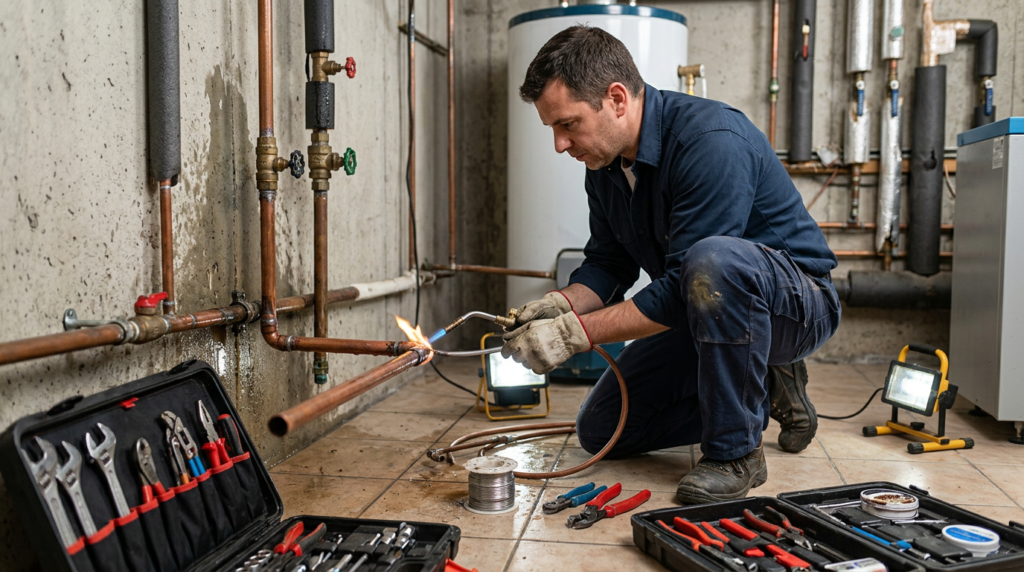
Quick answer: Call an emergency plumber when a plumbing problem is actively causing damage, creating a health risk, or could quickly get worse. Common examples include a burst pipe, sewage backing up, a water heater leaking or venting oddly, no water to the whole home, or an overflowing toilet you can’t stop. If shutting off the fixture or main valve doesn’t stabilize the situation, treat it as an emergency.
Situations That Count as a True Plumbing Emergency
If water is spreading fast or you can’t control the source, it’s an emergency. A burst supply line, a failed washing machine hose, or a cracked water heater tank can soak floors and walls in minutes. The quickest first move is shutting off the nearest valve (under a sink or behind a toilet). If that doesn’t stop it, shut off the home’s main water valve and call an emergency plumber in Athens right away.
Sewage is also an emergency. If a toilet overflows repeatedly, multiple drains back up at once, or you smell strong sewer gas, avoid using any water and keep kids and pets away from the area. Sewage can carry bacteria, and continued use can push contamination into tubs, showers, and floor drains.
Gas-related concerns move to the front of the line. If you suspect a gas leak near a water heater or you notice a rotten-egg odor, leave the area and contact your gas utility first. For electric water heaters, burning smells, sizzling, or tripped breakers paired with moisture are also urgent—turn off power at the breaker if it’s safe to do so.
Emergency Now vs Can Wait: Quick Decision Checklist
Use this as a fast gut-check. If you’re unsure, err on the side of stopping water use and getting help.
| Scenario | Emergency now or can wait? | Immediate first action |
|---|---|---|
| Burst pipe or spraying supply line | Emergency now | Shut off main water valve; open a lowest-level faucet to relieve pressure |
| Overflowing toilet that won’t stop rising | Emergency now | Turn the toilet shutoff valve clockwise; lift tank lid and raise float if needed |
| Sewage backing up into tub/shower or multiple drains | Emergency now | Stop using all fixtures; keep people/pets away; ventilate if safe |
| Water heater leaking from the bottom or making loud popping with water on the floor | Emergency now | Shut off cold supply to heater; turn off power (breaker) or set gas control to off |
| Strong sewer-gas smell inside | Emergency now | Stop running water; ventilate; avoid flames/sparks; call for service |
| No water to the whole house (neighbors still have water) | Often urgent | Check main shutoff position and meter; avoid running appliances until diagnosed |
| Single slow drain with no backup elsewhere | Can often wait | Stop using that fixture; try a plunger; avoid chemical drain cleaners |
| Small drip under a sink with a stable catch bucket | Can often wait (monitor) | Close the under-sink shutoff; place a pan; dry area to track new moisture |
| Rotten-egg odor or suspected gas leak near water heater | Emergency now | Leave the area; call gas utility (or 911 if immediate danger); don’t operate switches |
Athens-Area Practical Tips: Shutoffs, Freeze Risk, and Slab-Leak Clues
Athens homes can see sudden cold snaps in winter that catch plumbing off guard. Pipes in exterior walls, crawl spaces, and uninsulated hose bibs are common trouble spots during freeze events. If a freeze is forecast, locate your main shutoff ahead of time, disconnect hoses, and know where the interior shutoffs are for sinks and toilets so you can react quickly if a line splits when temperatures rise.
In many Georgia homes, the main water shutoff is often near where the water line enters the house (sometimes in a garage, utility room, or near a water heater), or at an exterior wall close to the street-facing side. Some properties also have a curbside meter box near the street. Finding these before an emergency can save minutes that matter—label the valve, make sure it turns, and keep the area accessible.
Slab foundations are also common in the region, and hidden leaks can show up as subtle signs: a warm patch on the floor, unexplained dampness at baseboards, the sound of water when everything is off, or a water bill that jumps without a change in use. If you suspect a slab leak, avoid repeatedly turning water on and off “to test it,” since pressure swings can worsen a weak spot; shut off what you can and get it checked.
Safety Disclaimer and What to Do While You Wait
Evacuate and call 911 if you see fire, heavy smoke, or a strong gas smell you can’t quickly explain. If you suspect a gas leak, leave the building and contact the gas utility from outside; don’t flip light switches, use lighters, or start vehicles in an attached garage. Don’t enter standing water if it’s near electrical outlets, extension cords, appliances, or the main electrical panel—turn off power at the breaker only if you can do it safely and without stepping into water.
For water leaks you can access, start with control and containment. Shut off the water at the closest valve you can reach; if that fails, use the main shutoff. Open a faucet on the lowest level to relieve pressure and help drain remaining water from the lines. Move towels, rugs, and valuables away from wet areas, and use a bucket to catch drips.
If a drain is backing up, stop using all fixtures connected to that line. For a toilet that won’t stop filling, lift the tank lid and gently raise the float; if it keeps running, turn the shutoff valve behind the toilet clockwise. Avoid chemical drain cleaners during emergencies—they can burn skin, damage some piping, and complicate snaking or camera inspection.
If you can’t stop the water or sewage is present, call an emergency plumber now.
Company option: If you’re looking for a local provider to contact, Blueprint Plumbing Services LLC is one option to consider.